When I first started learning Japanese, I made a simple bargain with the writing system.
Kanji was the enemy. Katakana was my friend.
Kanji looked impossible: thousands of characters, multiple readings, small visual differences, and compounds that seemed to hide their meaning on purpose. Katakana looked merciful.
ア, イ, ウ, エ, オ.
Clean. Limited. Phonetic.
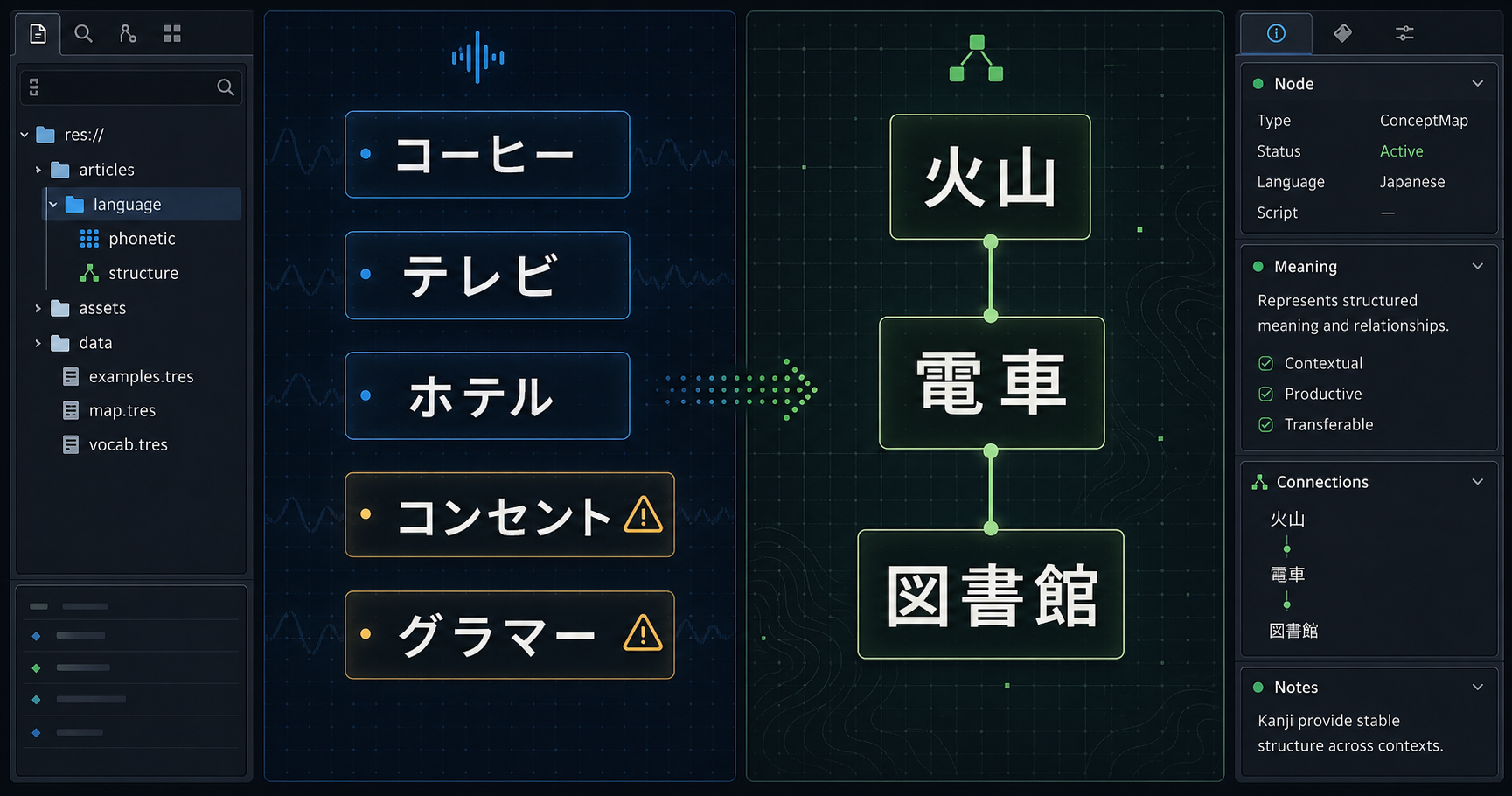
Even better, many katakana words sounded familiar. コーヒー sounded like coffee. テレビ sounded like TV. ホテル sounded like hotel. バス sounded like bus. As a beginner, I treated these words as free vocabulary. Japanese had finally handed me a shortcut.
It had not.
It had handed me a polite misunderstanding.
Why Katakana Feels Easy
Katakana feels easy because it gives beginners recognition at the exact moment they need it.
Early Japanese study has plenty of friction. Kanji blocks your reading. Particles rearrange how you expect sentences to work. Verbs change shape. Even typing can feel awkward until you know a word’s reading.
Then katakana appears with words like these:
- コーヒー
- バス
- テレビ
- ホテル
- レストラン
- インターネット
You can sound them out. You can connect them to words you already know. You get a small win, and early learners need small wins.
Katakana deserves that early affection. Japanese uses it for loanwords, names, emphasis, technical terms, brand names, sound effects, and style. The script does real work.
The danger starts when recognition turns into confidence. Katakana can make you feel that you understand a word because you recognize its sound.
Sound helps. Sound also lies by omission.
The Familiar Words Need More Suspicion
The strangest katakana words are not always the hardest ones. Strange words warn you to slow down.
Familiar words cause more trouble because they invite a guess.
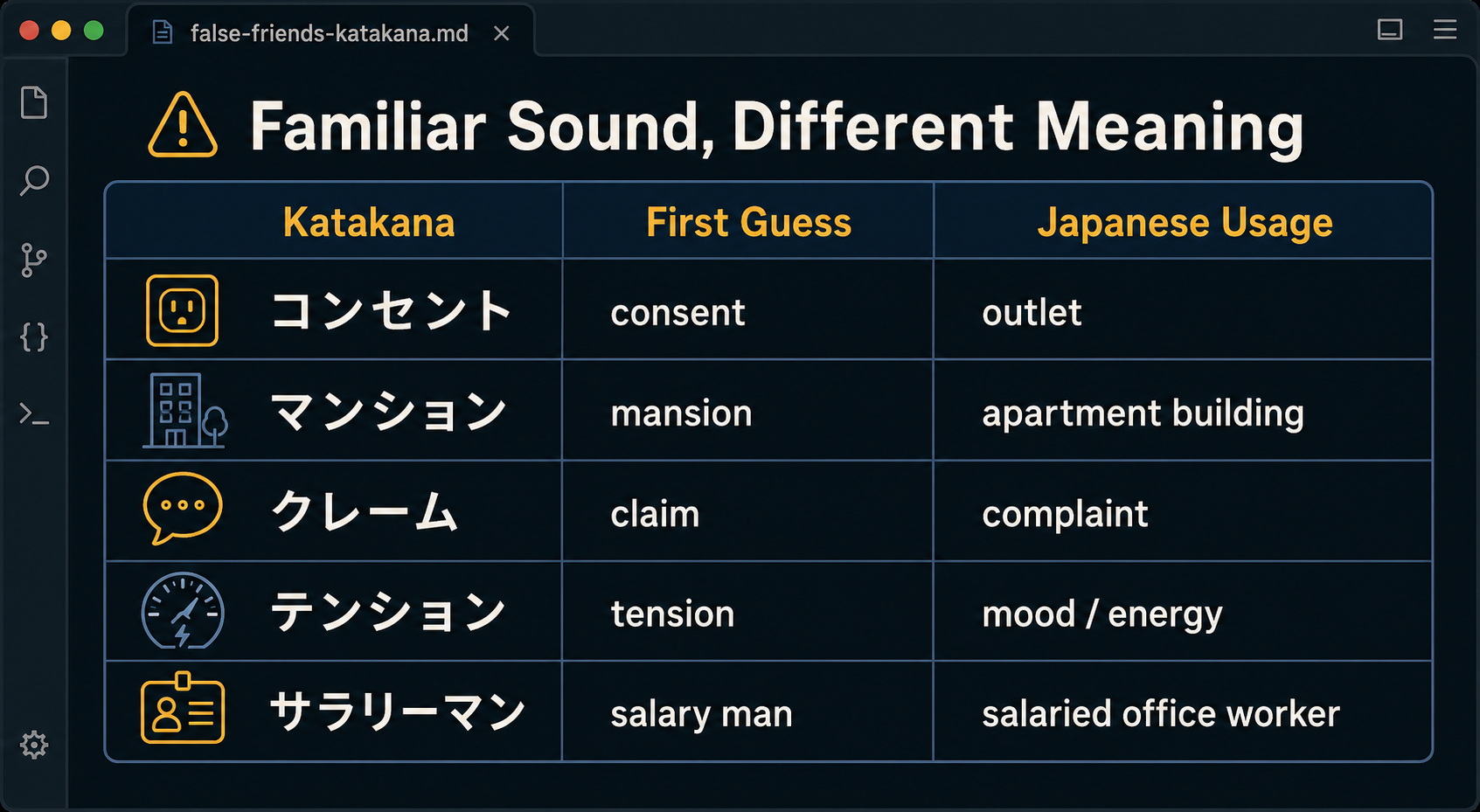
A learner sees コンセント and thinks of “consent.” Japanese means an electrical outlet.
マンション sounds like “mansion.” In Japanese, it usually means an apartment or condominium building.
クレーム looks like “claim.” It often means a complaint.
テンション sounds like “tension.” It often points to mood, energy, or excitement.
サラリーマン sounds transparent enough, but Japanese uses it for a salaried office worker with a specific social image.
These words taught me that katakana is not English written in Japanese. It is Japanese vocabulary wearing borrowed clothes.
Sometimes the clothes still fit. Sometimes Japanese has tailored them. Sometimes the original word has been shortened, shifted, or sent into daily life with a job it never had in English.
Gairaigo Is a Pattern, Not a Shortcut
Gairaigo, Japanese loanwords, become easier to understand when you stop treating them as shortcuts.
A gairaigo word may come through many source-language paths: English, French, Portuguese, German, Dutch, or another language. It may keep its original meaning, narrow it, broaden it, shift it, or become something uniquely Japanese. Some words are direct borrowings. Some are abbreviations. Some are Wasei-Eigo: English-looking expressions made or reshaped in Japan.
The surface can stay familiar while the meaning moves.
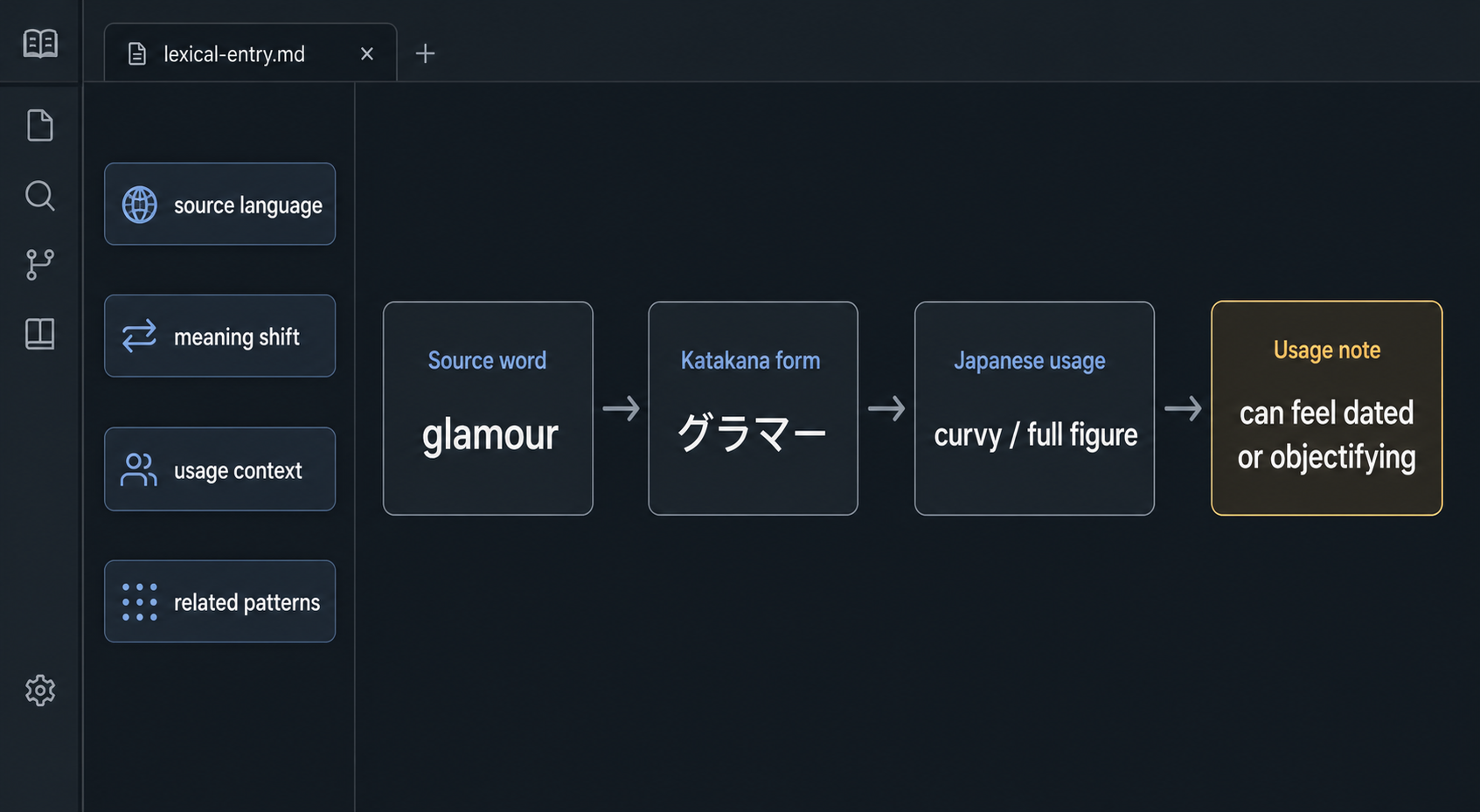
Take グラマー. If you approach it through English, you may expect “glamour”: elegance, charm, or stylish beauty. In Japanese, グラマー often points to a woman with a full or curvy figure, and the word can feel dated or objectifying depending on context. That is semantic shift in practice.
That gap is exactly why I built Gairaigo.Jepang.org as part of the broader Jepang.org ecosystem. I wanted a reference for Japanese loanwords that shows more than a quick gloss. A useful entry should help a learner ask better questions:
- What does this word mean in Japanese?
- Where does it likely come from?
- Has the meaning shifted?
- Is it shortened?
- Is it Wasei-Eigo?
- What other words follow the same pattern?
That last question matters most. Gairaigo is not just a list of borrowed words. It is a record of how Japanese absorbs, trims, repurposes, and domesticates foreign vocabulary.
The useful question is not only “what language did this come from?” The better question is “what did Japanese do with it?”
Kanji Pays You Back Later
Kanji has the opposite learning curve.
At first, kanji hides everything. You cannot pronounce a character. You cannot guess the word. You may not know how to look it up quickly.
Then, slowly, kanji starts paying you back.
Once you know enough characters, unfamiliar compounds become less opaque. The characters give semantic clues. They do not solve every reading problem, but they show the shape of the meaning.
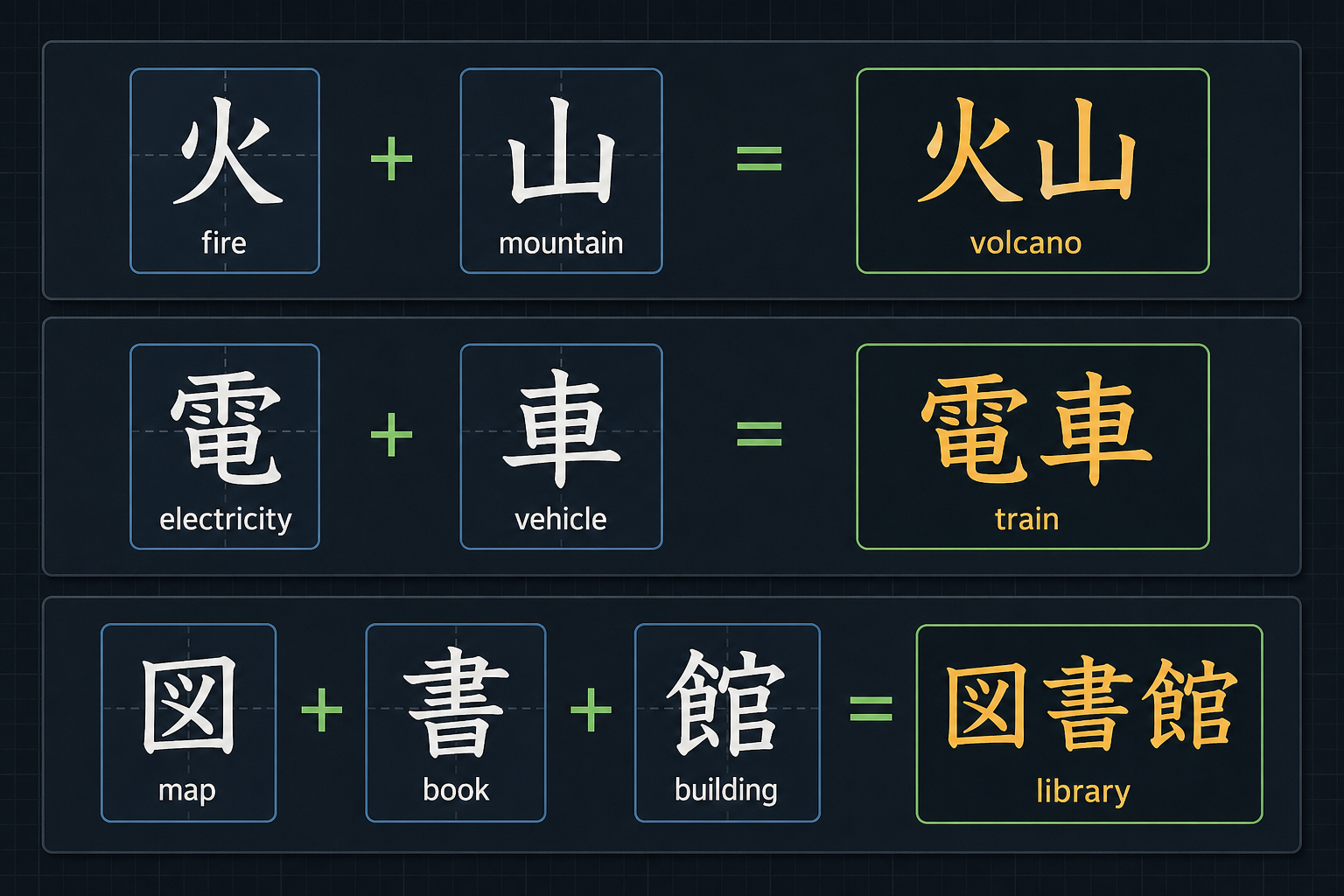
火山 breaks into 火, fire, and 山, mountain. The word means volcano.
電車 combines 電, electricity, and 車, vehicle. The word means train.
図書館 combines 図, diagram or map, 書, writing or book, and 館, building or institution. The word means library.
Kanji stays difficult. Readings stay messy. Exceptions stay alive. Japanese remains Japanese. But kanji often gives you structure, and structure matters when sound alone cannot carry the meaning.
Japanese has many homophones. The sound こうしょう can point to 交渉, negotiation, 高尚, refined or noble, 校章, school emblem, or 考証, historical investigation. The sound alone leaves you guessing. The characters tell you which word you are reading.
That is why kanji changes character over time. Early on, it feels like a wall. Later, it becomes a map.
Sound Is Not Meaning
Katakana usually tells you how a word sounds. Kanji often tells you what kind of meaning a word contains.
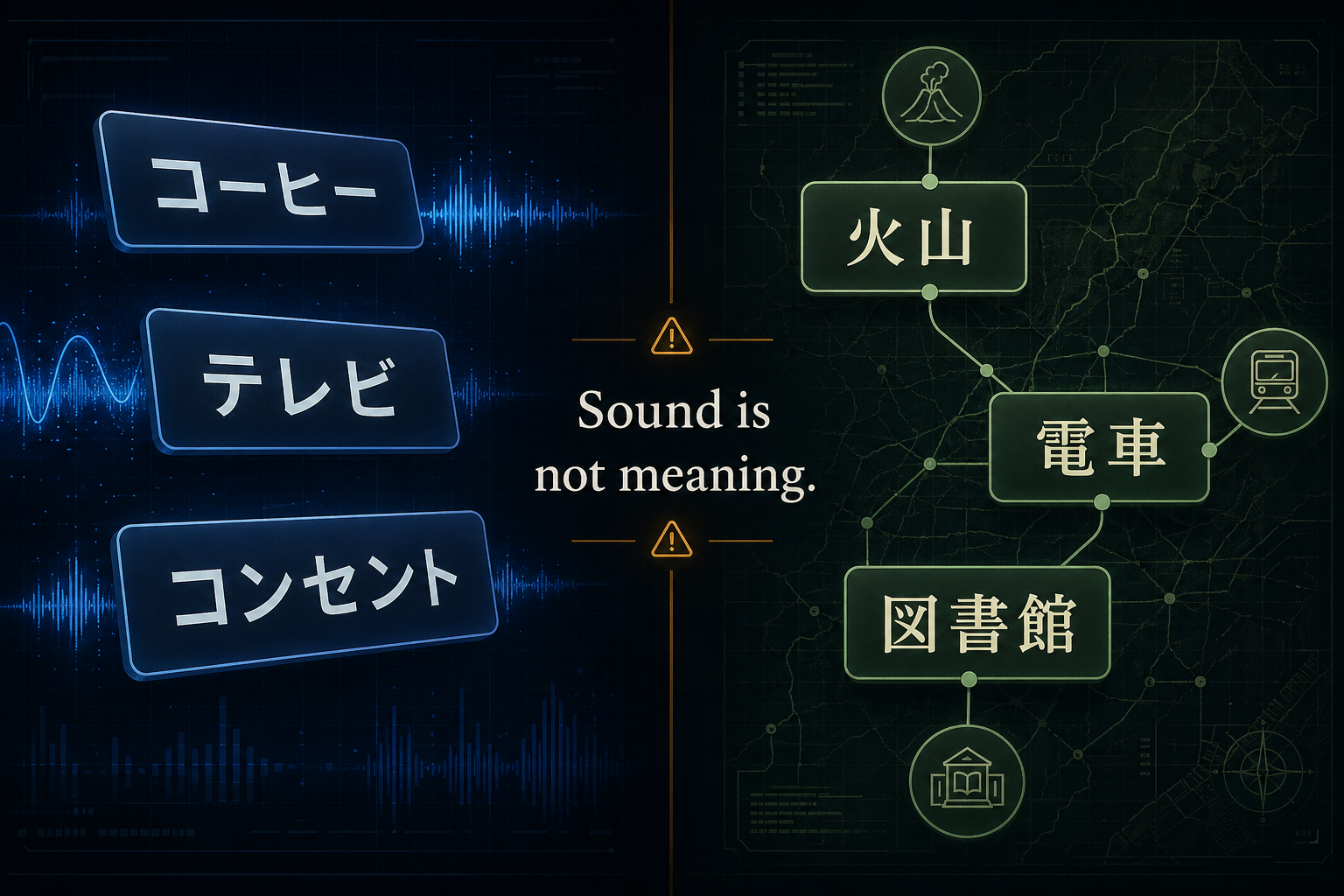
For beginners, sound feels like the bigger problem. You just want to read something without stopping every three seconds. Katakana helps with that.
For intermediate learners, meaning becomes the bigger problem. You can read the word, but you still need to know what Japanese means by it. That is where katakana deserves suspicion and kanji starts to feel useful.
So no, katakana is not the enemy.
But it is not the harmless friend many beginners imagine either.
Katakana is useful, stylish, flexible, and sometimes misleading. It invites you to recognize a word before you understand it.
Kanji is not the enemy either. It is difficult, but it gives back. The more you learn, the more it helps you decode unfamiliar vocabulary, distinguish homophones, and see the inner structure of Japanese words.
At the beginning, katakana feels like a friend, and kanji feels like a wall.
Later, katakana becomes the charming suspect, and kanji becomes the strict teacher who was helping all along.
That is one of the strange pleasures of learning Japanese. The thing that looked easy becomes complicated. The thing that looked impossible becomes useful. Somewhere along the way, you stop trying to defeat the writing system and start asking what each part is trying to tell you.